Episode 186 Show Notes
 Episode 186. What happens when one of Japan’s most ancient art forms meets your favorite grab-and-go drink? This week on Sake Revolution, John and Tim crack open something truly special — a one cup sake housed in genuine Imari porcelain, the same fine ceramics that were traded to Europe as far back as the 1600s. The brewery behind it, Koimari Sake Brewery of Saga Prefecture, has crafted a series of five beautifully designed cups that double as collectible works of art. And when it comes time to actually taste what’s inside, both hosts are caught completely off guard by a bold, bright acidity that nobody saw coming. Tune in for a tasting that’s equal parts art history lesson, sake education, and pure delicious surprise. #SakeRevolution
Skip to: 00:19 Show Opening
Welcome to the show from John and Timothy
Skip to: 05:23 Koimari Sake Brewery
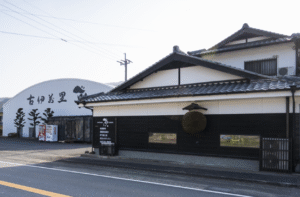 Koimari Shuzo is a reputable, small-scale brewery in Imari City, Saga Prefecture, Japan, established in 1909. Known for premium, award-winning sake like the “Koimari Saki” line, they focus on crafting elegant, fruit-forward, and crisp brews using local rice, soft, natural water, and traditional, small-batch techniques.
Key Aspects of Koimari Brewery:
History & Origin: Founded in 1909 by the Maeda family, who previously ran a kimono shop during the Edo period. They take their name from the historic “Koimari” porcelain, reflecting the region’s cultural heritage.
Location: Situated in Imari City, Saga Prefecture, Kyushu.
Sake Profile: Known for producing clean, crisp, and smooth, with a delicate balance of acidity and umami,often featuring notes of peach, apple, or tropical fruit.
Website: https://sake-koimari.jp/
Facebook: https://www.facebook.com/sakekoimari/
Instagram: https://www.instagram.com/koimari_official/
UrbanSake: https://www.urbansake.com/sake-guide/koimari-shuzo/
Skip to: 10:32 Sake Tasting: Koimari Nomanne Porcelain One Cup

Koimari Nomanne Fuyoude (lotus flower)
Brewery: Koimari Shuzo
Prefecture: Saga
Classification: Junmai
ACIDITY: 2.5
ABV: 15.0%
SEMAIBUAI: 65%
NIHONSHUDO: +2.0
RICE: Saga No Hana
YEAST: #701

Koimari Nomanne Tachibana (ancient citrus)
Brewery: Koimari Shuzo
Prefecture: Saga
Classification: Junmai
ACIDITY: 2.5
ABV: 15.0%
SEMAIBUAI: 65%
NIHONSHUDO: +2.0
RICE: Saga No Hana
YEAST: #701
Skip to: 232:52 Show Closing
This is it! Join us next time for another episode of Sake Revolution!
Announcing Patreon
 Now there is a new way to support Sake Revolution. Join us on Patreon! Patreon is an online platform that allows you to support your favorite creators by subscribing to a monthly membership. At Sake Revolution, we’re offering two tiers, each with its own perk. If you enjoy our sake podcast, if you are able, please consider supporting this labor of sake love! See below to learn about our Patreon support levels.
-
Sake Enthusiast
Have you ever wanted to sip along with us as we taste our sakes on the podcast? Now you can! As a Sake Enthusiast patron, you’ll get the inside track and know in advance which sakes we’ll be featuring on the show. This allows you to get them on hand and sip along with us while you listen.
-
Sake Otaku
As a Sake Otaku supporter of the pod, you’ll get access to all the Sake Enthusiast intel along with access to a monthly live zoom Sake Happy Hour taking place the first Weds of every month at 9pm ET (6pm PT). Visit with us live on zoom! Come with all your questions and suggestions and enjoy a relaxed and fun Happy Hour with with us as we all sip sake together!
Episode 186 Transcript
John Puma: 0:21
Hello everybody, and welcome to Sake Revolution. This is America’s First Sake podcast. I’m your host, John Puma From the Sake Notes, also the administrator over at the Internet Sake Discord, as well as the lead mod at Reddit’s r slash sake community.
Timothy Sullivan: 0:38
And I am your host, Timothy Sullivan. I’m Sake Samurai. I’m the Director of Education at the Sake Studies Center, and I’m also the founder of the Urban Sake website. And John and I will be here tasting and chatting about all things sake and doing our best to make it fun and easy to understand.
John Puma: 0:54
Hey, how you doing, Tim?
Timothy Sullivan: 0:57
I am doing good. How about you, John?
John Puma: 0:59
Hanging in there. It’s been, just been, uh, very busy lately and I’m just trying to like, keep just trying to. Hang on and get through it all.
Timothy Sullivan: 1:09
Welcome. Welcome to Modern Life in the Big City,
John Puma: 1:12
Yeah, that’s, I think that’s exactly what I’m experiencing is like, wow. Uh, it’s, it becomes a little overwhelming at a certain point, but, you know, we’ll get through and, and, uh, and you know what helps me get through.
Timothy Sullivan: 1:24
What’s that?
John Puma: 1:25
Okay. Uh, no.
Timothy Sullivan: 1:27
I thought you were gonna say meditation and a healthy diet.
John Puma: 1:30
Oh. Also now I honestly, I really enjoy doing the show. This helps relax me.
Timothy Sullivan: 1:36
Yes. I mean, come on. A good glass of sake after a long day at work is our recipe for happiness and definitely our hobby as well, right.
John Puma: 1:46
Mm-hmm. And, and you know what they say? It is all things in moderation.
Timothy Sullivan: 1:49
For sure, and I think we have a fun episode planned for all our listeners today. We’re going to get funky, but kind of in an upscale way, wouldn’t you say?
John Puma: 2:01
Um, yeah, I would, I, I wanna say Tim, I don’t know, you know, at first when, when I was presented with this, uh, with this sake and I, and you said that you wanted to do a. A funky packaging on this. I was like, Tim, I do not know if this is funky packaging. It is very elegant. It’s elegant packaging. And, and do we have, you know, I don’t wanna make a new series on elegant packaging, so I guess we’ll just roll with it.
Timothy Sullivan: 2:27
Yes,
John Puma: 2:29
So I guess anything that’s, anything that’s unusual is funky. Right? That is the, that’s that’s how we’re doing this.
Timothy Sullivan: 2:35
yes, this is under the umbrella of, maybe it can be fun and funky.
John Puma: 2:39
Yeah. Okay. Alright. We’re not renaming it though, but
Timothy Sullivan: 2:43
No, we’re not.
John Puma: 2:44
We’re not gonna go back and redo all the episodes and be like, it’s actually a fun and funky packaging. No, this is
Timothy Sullivan: 2:50
no.
John Puma: 2:51
funky packaging. So, um, yeah, we’ve, we’ve teased long enough, Tim, we’ve
Timothy Sullivan: 2:57
Yes. So we are gonna be featuring a one cup sake, which doesn’t sound too out there or too crazy, but this is actually a one cup sake that is in a porcelain one cup.
John Puma: 3:14
See, this is why I say elegant, and you say funky.
Timothy Sullivan: 3:17
Yes,
John Puma: 3:19
But it is unusual. I don’t think I’ve ever seen a porcelain, um, one cup apart from the, apart from this, uh, this series that we’re gonna be, um, talking about today. So, Tim, before we get into the question of who is making Porcelain one Cups, I need to, uh, indulge my, my inner Stan Lee and say that every episode might be somebody’s first episode and ask you. What is a one cup for our new listeners at home?
Timothy Sullivan: 3:48
Well, Stan, a one cup is, just what it sounds like. It is a. Cup of sake that is sold in a preportioned 180 ml size, and it usually has like a pull tab, foil cover on it. And usually they’re made of glass and it’s like a grab and go thing. You can get at the convenience store or at the train station, you peel off the top and you can drink right out of the cup. A single serving. And these became popular from the sixties and. They’re viewed as very utilitarian styles of sake.
John Puma: 4:24
Yeah. Yeah. I’d say that’s right and I think that, yeah, for me, I always associate it with those like long. Train rides those long Shinkansen rides. Uh, and, and I’d say the popularity and the growth of the One Cup has probably coincided with that, with that rail system, as you mentioned the sixties, I was like, yeah, that really does line up a little bit, doesn’t it? That’s very cool.
Timothy Sullivan: 4:46
Yeah, so to have a one cup made out of fine Japanese porcelain is not usual. And dare I say funky. So we’re gonna dive into this really unique packaging today to see what it tastes like and to talk a little bit about the brewery and the design series that they came up with to promote this porcelain beautiful porcelain one cup. Uh, you can buy here in the States. So, uh, it’s gonna be a great, great topic to talk about today.
John Puma: 5:16
Excellent. Excellent. Great. So who is this guilty party that’s using ceramic in their one cups? Tim?
Timothy Sullivan: 5:22
Yeah, so the brewery is called Koimari Sake Brewery, and they’re located in Saga. If you’ve ever heard of Imari before, if that rings any kind of a bell for you, uh, you may be into porcelain, uh, because there’s a very famous porcelain called Imari porcelain in Japan. It’s the same area of Japan as Arita porcelain as well. I think we’ve talked about arita porcelain on the podcast before when we’ve done episodes on Saga Prefecture, right?
John Puma: 5:54
Yeah. We actually talk about saga. Weirdly often, I think. Um, so, uh, if you wanna go and talk about, uh, if you wanna go and listen to us talk about, uh, about Saga porcelain, you can go back to episode 29, the Saga of Saga Kuras, which inspired naming on that one. I really like that. And then, uh, Koimari actually got, got mentioned and sipped on when we had Jessica Jolie on the show talking about saga sake in episode 119. So back there and, and look into this, uh, when you’re done listening to this episode.
Timothy Sullivan: 6:27
Yeah. So Koimari Brewery, there is a port town of Imari and that’s where this porcelain was shipped all around Japan and later shipped to the wider world. Um, and they named a series of sake after. This very famous porcelain from their hometown. And this brewery was founded in 1909, but today it’s still a relatively small brewery, uh, making about 700 Koku a year.
John Puma: 6:57
Oh, wow. Yeah. That is small. Could you, um, could you remind everybody at home what a Koku is?
Timothy Sullivan: 7:03
Yes, A koku is a measurement of volume for the production of a sake brewery, and one koku equals 1,800 liters.
John Puma: 7:14
And what does that translate into for like bottles?
Timothy Sullivan: 7:18
do you know the, the 1.8 liter Isshobin party size bottles?
John Puma: 7:23
I sure do.
Timothy Sullivan: 7:24
You sure do. Well if you have 100 of those, imagine that stacked up on a pallet that is one koku, and then they make 700 Koku. So, uh, that gives you an idea of how many bottles, not huge production, I think for Japan, it’s on the smaller side, uh, but they export their delicious sake to the states. So, uh, all listeners here in the States can enjoy these sakes as well.
John Puma: 7:52
Very cool. I’m, I’m glad that they are, getting their, you know, little by little, I’ve been seeing more of their stuff in the States and it’s been a lot of fun, to see them, grow their, their export.
Timothy Sullivan: 8:06
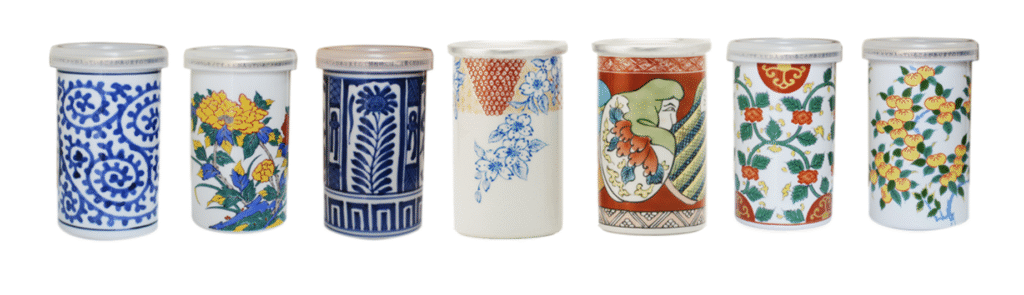
Yeah, so if you’ll indulge me, I just want to talk very briefly about the. Imari porcelain that inspired these one cups. Just a little bit of background. We talked about Aritaware in the past, and Imari is a same region, very similar. I think that, uh, Porcelain falls under the umbrella of the arita region. They’re very, very closely related. This is one of the first types of porcelain to be exported out of Japan for the European market. And that was way back in the Edo period. So in 16 hundreds, little little bits of this porcelain started trickling out, being traded. It’s known for very vibrant colors, usually on a white background. And the designs are influenced by a lot of the popular Chinese porcelain that was available around these times. Brocade patterns are very, very popular and, yeah, it’s just very, very classic. We’re gonna include some photos of. Koimari porcelain in our show notes. So if you’d like to see some really classic examples of what this particular type of porcelain looks like, check out our show notes for sure. And we’ll also post photos of these beautiful one cups that are inspired by this traditional designs of the classic porcelain.
John Puma: 9:34
And I’m glad we are because I think it’s kind of hard to, uh, explain or hard to have people picture what this looks like without having actual, um, images of it. So remember guys show notes.
Timothy Sullivan: 9:45
Yes, this is, here we are again with another VIS visual episode. Uh, trying trying
John Puma: 9:51
happens a lot here on Sake Revolution. But you know, I, I’m sure people, uh, enjoy checking out the show notes.
Timothy Sullivan: 9:58
Yeah, it happens a lot with the funky packaging episodes because we’re talking about the visual appearance of the packaging a lot. So, uh, definitely check out the show notes to see the pictures.
John Puma: 10:09
Very cool. So, uh, let’s get into these cups and, and we’ll talk about what we’ve got in our hands, talk about what they look like, and then after that we’ll talk about what they taste like.
Timothy Sullivan: 10:20
Yes. So, uh, John, you and I both have. One of the, uh, koimari cups
John Puma: 10:28
do.
Timothy Sullivan: 10:29
and we have different designs.
John Puma: 10:30
Yes. Yes, though there, there, it looks like there are quite a few different designs. I’d say at least. Whether there at least five or is it just five?
Timothy Sullivan: 10:40
yeah, there are five classic ones and they just launched two additional ones that are not exported yet. So,
John Puma: 10:48
We’re always one step behind here in the us.
Timothy Sullivan: 10:51
yes, so, I am going to introduce mine first. So it comes in a, a black gift box and the design, there’s a little sticker on the front that shows you which of the five designs is the cup inside, so you don’t have to open it up to see which of the five designs you have.
John Puma: 11:11
No, and I see you’re saying this is not a a gotcha. We don’t have
Timothy Sullivan: 11:13
this is not
John Puma: 11:14
buy, you have to buy all. You have to keep buying them over and over again and hope you get all of off the whole set.
Timothy Sullivan: 11:20
So when we open it up, uh, there is a full sheet folded in there with a front and back color sheet that talks all about this design series and talks all about the, different designs and what they mean. It’s in Japanese and English. So this is absolutely perfect and it’s gonna help us a lot today. And then you pull out the cup itself. Oh wow. That is really nice.
John Puma: 11:48
Yeah. And, and you know, for people at home who have had one cups before, you might think like, well, wait a minute. A box. A box for a one cup. And you know, number one, funky packaging. Number two. since these are porcelain, they are, you know, probably a little bit more fragile than your average one cup. So they wanna make sure these, um, can stand some, some wear and tear.
Timothy Sullivan: 12:10
Yeah. And I have a strong, strong suspicion that these are often gifted
John Puma: 12:15
Mm.
Timothy Sullivan: 12:16
as, you know, a type of a gift or omiyage and having the beautiful, uh, small box to hold these,, porcelain ceramic one cups is really, really a nice touch. So do you have yours out as well, John? I
John Puma: 12:30
I do, I do. So, um, tell me about yours.
Timothy Sullivan: 12:34
Okay, so mine is a very beautiful blue and white design, and it is called in, it is called in Japanese Fuyode Fuyode, and that means the lotus hand. So it’s the lotus hand pattern, and it’s a design that originated in China.
John Puma: 12:56
Oh, and that, that’s a, that pattern, that, that style is something that I’ve seen, you know, many times over the years. I’m sure that a lot of our listeners have seen this style before, probably on like, um, a. Uh, maybe on teacups and stuff like that.
Timothy Sullivan: 13:12
Yeah, it’s a classic indigo, blue and white. Uh, it looks like old school. Porcelain. There’s like a key design around the bottom and some flowers that are meant to invoke, uh, lotus flowers, and it’s absolutely beautiful. I really, really love it. So that’s the story of mine. Blue and white, classic old school porcelain. Which design did you get, John?
John Puma: 13:38
So I’ve got the, uh, Tachibana, it’s listed as being a Nabeshima style Tachibana, and mine has, Kind of a yellow citrus fruits on it, on a, on a tree. It’s a nice little drawing of, trees with, with citrus on it. And I went and took a look at some of the language on this, and it says that the, the tree is bearing fruit of everlasting life.
Timothy Sullivan: 14:04
Oh
John Puma: 14:05
Yeah.
Timothy Sullivan: 14:05
yeah,
John Puma: 14:06
So it’s not just any fruit. This is some qual high quality fruit.
Timothy Sullivan: 14:11
You, you can’t get that fruit at Whole Foods, I
John Puma: 14:13
No, I don’t think you can. Yeah.
Timothy Sullivan: 14:17
Tachibana is an ancient variety of citrus. So I, I read it’s like a old version of like a, a tangerine or something
John Puma: 14:26
Probably, yeah.
Timothy Sullivan: 14:27
Yeah, so we have the Tachibana. Ancient citrus and we have the lotus hand in my
John Puma: 14:35
Mm-hmm.
Timothy Sullivan: 14:35
and they’re both really beautiful. So your design has like yellowish orangeish, citrus fruits on a tree with green leaves in the background. The one thing that’s common among both of all these cups is what I mentioned about. The, co imari porcelain in general, which is kind of vibrant colors on a white background. I think that’s something that is indicative of the style. So we both have that, a beautiful white background that really makes the design pop, doesn’t it?
John Puma: 15:06
It does, it does, it looks great. Um, you know, they, they didn’t mess around here. They, they made something really beautiful.
Timothy Sullivan: 15:13
Yeah. Now looking at the bottle, I noticed that there’s something that is a little incongruous with, uh, ancient. Designs, which is a few, a few QR codes here on the back.
John Puma: 15:28
You know, I got a blend of old and new.
Timothy Sullivan: 15:30
yes. So the first QR code is called The Saga, and this is a sticker that they put on the back here. And this QR code goes to the saga sake Brewers Association and just is kind of a home base for their, you know, their, regional. Style and, a homepage for, what they want to promote as far as what saga sake means. And I think that’s really great. So they’re working hard to promote their regionality and their Prefecture in their regional style. So that’s one QR code. And then there’s the traditional. It, uh, distributors label on the back as well. And this is distributed by New York Mutual Trading here in New York, LA Mutual trading on the West coast. And this has a QR code as well, so you can also get the stats and the tech sheet for this product. Um, and it’s got like the alcohol and the volume, size, et cetera, et cetera. Yeah, so a couple QR codes along with our, our ancient porcelain. I love that.
John Puma: 16:34
You know, it’s, uh, you know, gotta gotta bring that, uh, modern touch the saga. That’s a, that’s a great name for it. Oh yeah. And then on top we have another, we have another modern bit, uh, sticker that says GI Saga. Another one of those geographical indicators.
Timothy Sullivan: 16:51
You got it. So saga sake is protected by that GI certification and yeah, so they’ve got this labeled on all sides, making sure we know this is from saga, if the porcelain wasn’t a dead giveaway. And on top of that, there is a plastic cover. On this, which means that if you open the sake and wanna seal it back up, it comes with this removable plastic cap that you can use. I think we talked about this cap before when we talked about one cups.
John Puma: 17:22
we have, and while the cap is very surprisingly good at keeping the sake inside, I would say maybe. Don’t 100% say, oh, well it’s sealed now it’s, it’s covered. But sealed is, is a strong word, and I would kind of treat this as a little bit open once it’s opened.
Timothy Sullivan: 17:43
let’s take off the plastic cover. All right. Yeah. And there’s the foil pull tab.
John Puma: 17:50
Yep. Now in the, in the states, a lot of cups, we have the little tab, like a, like a beer tab, and then it just opens up a small hole. In Japan, generally speaking, with, sake, you’ve got the pull tab where it takes off the entire top of the, uh, the entire top covering.
Timothy Sullivan: 18:06
That’s right. So that’s what we have here. The pull tab is like. Off to the side and when we pull on it, it’s gonna pull the foil off the entire top of this cup. So are we ready to do that? Should we pull the trigger?
John Puma: 18:20
I think we are ready to pull the trigger, or at least the pull tab.
Timothy Sullivan: 18:24
Alright. Okay.
John Puma: 18:29
Ooh, there we go. This is, this cup looks like, it looks like somebody poured me a sake in a very fancy porcelain cup. When I look in, when I put it down on my table and I look at it, I was like, ah, look at that.
Timothy Sullivan: 18:45
Yeah, so. The, the walls of this cup are relatively thick, so this, this looks like, to me, this looks like a, a tall slim teacup or
John Puma: 18:55
Mm-hmm. Yeah.
Timothy Sullivan: 18:57
Um, it’s very beautiful and I wanna note that the lip of the cup is also slightly rounded so that the metal has. The metal of the, uh, foil can wrap around and really seal this in. So there’s a little, uh, lip to the edge of this cup, and I’m sure it makes it very pleasant to drink out of as well.
John Puma: 19:19
Yeah. You know, maybe, maybe I was wrong about this lid. Maybe it will do a little more than I thought.
Timothy Sullivan: 19:23
Hmm. All
John Puma: 19:26
Um, we, I think we need to stop here though ’cause we’re getting perilously close to the idea of drinking the sake and we cannot do that until we have talked about what is in the cup. So this is a, Junmai from, koimari, brewery over in Saga, prefecture. Um, it uses saga no Hana rice, which i’m going to, give my amateur opinion and say that probably means. Flower of saga. it has been milled down to 65% of his original size. It’s using yeast 7 0 1, um, relative to the old seven and s meter value of plus two, that net, meter of dry to sweet. So expect something. Very, very slightly dry acidity of 2.5. Tim, I could be mistaken, but acidity of 2.5 is, is a touch on the high side, is it not?
Timothy Sullivan: 20:18
A little on the high side, but let’s, let’s reserve our judgment
John Puma: 20:21
mm We’re just talking about the numbers, Tim. That’s
Timothy Sullivan: 20:24
Yep. That’s crunching the numbers.
John Puma: 20:26
this crunch of the numbers. Um, and then of course, uh, the alcohol by volume is 15%. Sounds like a nice thing to have on a train,
Timothy Sullivan: 20:34
Yeah. Uh, this would be, this would be for the first class car I think.
John Puma: 20:39
exactly
Timothy Sullivan: 20:41
All right. Well, the, uh, well, one other thing we should make clear is that the five different designs, I think they all have the same sake inside. So John and I are tasting the same sake, even though we have different designs on our glasses
John Puma: 20:56
Yeah. It would be interesting if the cups actually changed the way the sake tasted because of what they print on the outside, but I don’t think that’s gonna be the case.
Timothy Sullivan: 21:03
All right. Well. Here we go. I’m
John Puma: 21:06
Well, let’s get a, let’s get the nose. It’s hard to get, hard to get the nose on a one cup. I find
Timothy Sullivan: 21:13
I do smell something.
John Puma: 21:15
me too. Hmm,
Timothy Sullivan: 21:17
So to me this smells, just a little bit creamy and a little bit, rice as well. This is, uh, gonna be. Yeah, gonna be a classic Junmai, so we’re not getting much, tropical fruit here. I think this is going to be one of those more lactic or rice forward sakes, which is a pretty classic style to put in a one cup.
John Puma: 21:40
I think so too.
Timothy Sullivan: 21:42
Yeah, so lovely little bit of cream or maybe butter
John Puma: 21:47
Ooh, that would be
Timothy Sullivan: 21:48
on the nose. Yeah. And then some rice that saga No Hana sake rice.
John Puma: 21:54
Hmm. All right, well,
Timothy Sullivan: 21:58
Smells good to me. It really, it really is a pleasant aroma.
John Puma: 22:01
it is. It is, and I, yeah, there is that, that, that, that ricey-ness not like a, not a aggressively rice, but just like faint, subtle, pleasant, All right, let’s, let’s
Timothy Sullivan: 22:13
Let’s give it a taste. Ooh.
John Puma: 22:18
Oh, that was surprising.
Timothy Sullivan: 22:20
Oh my gosh. That acidity, that acidity is there.
John Puma: 22:25
It’s the very present.
Timothy Sullivan: 22:26
Boom.
John Puma: 22:27
wow. It is. Um, it’s a lot more, um, I’m gonna say more tart than I was expecting from the aroma.
Timothy Sullivan: 22:34
Yes.
John Puma: 22:35
am shocked. I’m really legitimately shocked by this.
Timothy Sullivan: 22:40
It tastes good, but it’s tart. You’re right, it has this tart, a high acidity. Um, and I was expecting something much more down to earth basic with the, with the aroma, but it has this really bright acidity. Hmm. I like it.
John Puma: 23:03
Me too. I just wasn’t in any way expecting it. That’s, I’m just like,
Timothy Sullivan: 23:08
Hmm.
John Puma: 23:09
Hmm
Timothy Sullivan: 23:10
Oh, wow. That’s really good.
John Puma: 23:12
hmm. That’s really nice.
Timothy Sullivan: 23:14
it. Ha. If you think about, do you remember Sweet Tarts, those candies?
John Puma: 23:18
I two.
Timothy Sullivan: 23:19
It has a little bit of that.
John Puma: 23:22
Of that tart.
Timothy Sullivan: 23:23
sweet, sweet tart candy hint to it. But, it’s balanced with a grounding in like rice flavor. So 60, 65% rice polish. But the acidity of 2.5 really comes through and it’s such an interesting sake.
John Puma: 23:43
Yeah, this is fun. Uh, this is nice. So this is a one cup, and I’m gonna say, with the fact that it’s a one cup combined with this fun acidity here, what do we think for food?
Timothy Sullivan: 23:54
Mm.
John Puma: 23:57
I have some ideas, but I think that, but I wanna hear what you have to say.
Timothy Sullivan: 24:03
Well my, with this high acidity, my. Thoughts go immediately to something with citrus in it. So I was thinking like, if you’ve ever had a lemon chicken that is really lemony, I think like a lemon chicken would go really well with this. So rice, lemon chicken with that lemon sauce, that would be amazing. With this also a, a salad with a citrus vinegarette or, um, you know, those salads that have a little wedge of. Orange or grapefruit in them, something with a citrus, uh, and salad I think would be a great pairing as far as the weight is concerned. Like, um, nothing too heavy. That’s my idea. What, what do you think, John?
John Puma: 24:45
Um, for some reason, my, my brain immediately went and started craving tempura, uh.
Timothy Sullivan: 24:52
Hmm.
John Puma: 24:53
I wanted something a little bit oily like, you know, I, I don’t know exactly why, but, I feel like it’s gonna cut through that a little bit nicely. However, one, you know, I am, I am also very sold on your, on your Citrus idea. That sounds wonderful and matches my cup as a matter of fact.
Timothy Sullivan: 25:10
Mm-hmm.
John Puma: 25:11
But I can really go for something that’s a little bit, um, you know, a little bit on the more oily side of things. So I think tempura, I think a little bit more of the, maybe your, your more oily fishes. Like fishes, you’re more oily fish, like salmon or tuna. that sounds nice.
Timothy Sullivan: 25:28
Yeah, well my cup has the lotus root flour on it, so maybe I could do I could do Lotus root tempura and you could do the, Tachibana Citrus Salad. While we’re enjoying sipping on this cup, I have a little kind of a, a description. Of the project from the brewery. Now the, the brewery is owned by the Maeda family and the current Kuramoto owner is, Kumiko Maeda, who is one of, she’s a Toji owner and Kuramoto and,
John Puma: 26:07
Togi and komoto and all in that, that’s don’t see that many of those, but it’s, it’s pretty great when they are able to handle all aspects of the, of the brewery, uh, it’s pretty exciting. Double
Timothy Sullivan: 26:19
it’s amazing. Yeah. And this project has a name, it’s called Nomanne. And it was launched by Kumiko, who’s the fourth generation owner of Koimari Brewery. Uh, and the impetus behind this was to introduce the quality of Japanese sake and the traditional beauty of Imari and Arita porcelain to as many people as possible. So the name Nomanne means lets enjoy a drink in the Imari dialect
John Puma: 26:59
Cool.
Timothy Sullivan: 27:00
Um, this was inspired by a relatively recent trend in cup sake, which is normally produced in glass cups. And this is just a wonderful collaboration with a local pottery manufacturer to promote not only the sake of the region, but also the beautiful porcelain and ceramics that they have. So, uh, and they’re also tying in the connection to the saga Prefecture. Appellation, using Sake Rice. A hundred percent grown in saga Prefecture. So they’ve got all, this is a full court press of promotion for Saga Prefecture, right.
John Puma: 27:39
Yeah. They’re putting it all, putting it all on the line.
Timothy Sullivan: 27:42
Oh my gosh. I’m finding myself like going back and sipping and sipping and normally when we’re recording, you know, we’ll take a sip and we’ll go on blah, blah, blah. But I’m just finding myself just keep reaching back for this cup. It’s so elegant to hold and the acidity is the surprising. Component of this sake. I was not expecting that at all. Oh my gosh.
John Puma: 28:05
And I’ve had a couple of different sakes from koimari before, and not like this. This is not like anything else I’ve tasted from them. I’ve never known them to play with this high acidity stuff. And maybe, you know, maybe we just don’t get. Their, um, you know, their, their junmais or what have you. But this is a super fun, interesting thing. I wanna see more of it. Like, it’s really good. I think there’s a, you know, I, they’ve been dipping their toe in the market here and I’m glad to see it, but I would love to see them do more. Like, this is great.
Timothy Sullivan: 28:37
And John, I don’t think you’ll be surprised by this, but this, koimari, no Nomanne Cup also won a prize for, uh. Attractive Japanese souvenir contest.
John Puma: 28:49
Oh,
Timothy Sullivan: 28:50
Yes. In two, in 2007, this project won a prize as, uh, one of the most attractive Japanese souvenirs, and I think it’s well deserved. I would give this as a souvenir. I love this thing.
John Puma: 29:03
Yeah, absolutely.
Timothy Sullivan: 29:05
Yeah. So, this has been around for several years. This, Imari Cup, one Cup project, and. I think I bought one of these in Japan years ago, just out of pure curiosity, but I don’t remember which one I bought. I don’t remember what happened to the cup, but it is so wonderful that it’s now coming to the states. Like that’s the big difference is that these cups are now being exported to the us. You can, uh, buy them here now and. The description here says that when you’re done drinking, you could use the cup as a vase or a pen holder.
John Puma: 29:44
I mean, I plan to use this as a cup to drink sake out of when I’m done drinking sake out of this,
Timothy Sullivan: 29:49
Yeah,
John Puma: 29:50
uh, because I think it’s a really nice cup. Uh, but yes, I guess it could also be a pen holder if you were so inclined.
Timothy Sullivan: 29:58
yeah. Yep. I went through a phase where I collected one cups.
John Puma: 30:03
Me too.
Timothy Sullivan: 30:04
Yeah, I, I think everyone does. I mean, they’re so, they can be so cute. Right.
John Puma: 30:08
And then you come up, you come to this place where you have way too many you realize you’re not using them for anything except maybe decoration. And then at that point you still have too much for decoration and you need to make some decisions.
Timothy Sullivan: 30:22
Yes, I did a purge a few years back and I kept some sentimental one cups and I have, I do use a one cup as a pen holder on my desk, but it is the original hakkaisan, the old school Hakkaisan futsushu. One cup that they made years ago.
John Puma: 30:45
Yeah.
Timothy Sullivan: 30:47
They’ve since redesigned it and changed it, but I have one of the original ones from almost 20 years ago that is the old school design. And just as a nod to my connection to hakkaisan, I have that as my pen holder on my desk. And then in my China cabinet, I have some one cups that I are just too cute to give away. Too
John Puma: 31:08
I understand. I understand.
Timothy Sullivan: 31:11
There’s some really cute ones out there.
John Puma: 31:13
So will this one dethrone your Hakkaisan cup as the new pen holder?
Timothy Sullivan: 31:18
I don’t think I’m gonna turn this into a pen holder. I’m with you. I wanna, I wanna use this to drink out of from time to time, and I love that it has the little lid, but you’re right, the lid is not watertight. So this is just, this is just a gentle. Covering. But if you’re keeping something chilled in the fridge and it’s not gonna be jostled around, it’s perfect. And, this is great, but do you know what the problem is? Is that now I want to collect all five. So this is a problem.
John Puma: 31:50
See? Yeah. This is, this is where the issue lies. You see, you’ve, look what happened. You got you hand on one cup and you’re already like, I need ’em all.
Timothy Sullivan: 31:58
Yeah.
John Puma: 31:59
So we are very fortunate that this is actually not a gotcha, because then you would’ve bought like 25.
Timothy Sullivan: 32:06
This is a gotcha moment.
John Puma: 32:07
Yes, the definitely gotcha moment. Wonderful.
Timothy Sullivan: 32:12
John, do you feel a little elegant? Do you feel Bonita?
John Puma: 32:16
I do actually, and I have to say like, you know, uh, I still don’t feel funky. I do not.
Timothy Sullivan: 32:22
Okay. Okay.
John Puma: 32:23
stand, my ground and say, this is maybe not funky, but honestly, the sake ended up being the funkiest thing with that high acidity. It was really interesting and fun.
Timothy Sullivan: 32:31
Yeah, maybe this could be a, uh, secret, underground, funky sake episode, parading as a funky packaging.
John Puma: 32:40
us. We had no idea. My favorite thing is when we, I love when we have the sakes, and neither of us have tasted them before and we’re like, whoa, what the hell this is? It’s always a lot of fun.
Timothy Sullivan: 32:52
Yeah. Well, uh, just one last reminder to all our listeners is that if you’ve been listening to us talk about these designs, be sure to check out our show notes. We’ll have beautiful photos of all the designs and, you can check these out for yourself. ’cause a picture is worth a thousand words. John, it has been.
John Puma: 33:11
think we said a thousand words, so that’s good.
Timothy Sullivan: 33:16
Well, John, it’s been great to taste with you and I am so happy to try a sake that both you and I have never had before. Makes for very fun and exciting tasting. And, uh, this was just great and I really think this packaging is gonna be very successful here in the States. And I hope all our listeners check it out. I wanna, Say thank you to all of our listeners and especially our special community on Patreon. If you’re enjoying Sake Revolution and you’d like to support this podcast, the best way to do that is join us on Patreon. You can visit patreon.com/sake revolution to learn about supporting our show and joining our monthly live happy hour, which is so much fun.
John Puma: 34:03
It is.
Timothy Sullivan: 34:04
Yes, so please. Yeah. So please check it out and we hope you’ll join our community.
John Puma: 34:10
Yes. And, we want to hear from you. So you can contact us over at [email protected] and give us that feedback directly. You can also get us on social media. Tim will happily take your, your dms, uh, over on, uh, Instagram and other platforms. So I hope everybody’s got a, a cup handy. so until next time, please remember to keep drinking sake and Kanpai.