Episode 185 Show Notes
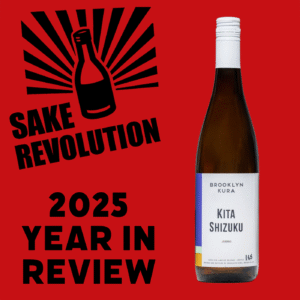 Episode 185. With 2025 over and done, it’s time to take a look back at the sake year that was. Join us this week for some casual sipping and some discussion on the highlights, surprises and challenges of this past year’s sake adventures. It’s also the moment of truth to review our “Sake Revolution Resolutions” – Did we achieve our goals? Whatever the outcome, we look forward to another year of great sake and many kanpais. We also announce some goals and plans for this year! Wishing you good sake in 2026! #SakeRevolution
Skip to: 00:19 Hosts Welcome and Introduction
Welcome to the show from John and Timothy
Skip to: 2:24 Sake tasting: Brooklyn Kura Kita Shizuku
Brooklyn Kura Kita Shizuku
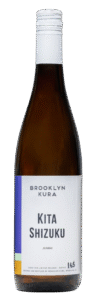
Brewery: Brooklyn Kura
Alcohol: 16.5%
Classification: Junmai
Location: Brooklyn
Rice: Hokkaido Kita Shizuku
Brand: Brooklyn Kura
Seimaibuai: 65%
Skip to: 13:28 Sake Revolution Resolutions
Skip to: 33:05 Show Closing
This is it! Join us next time for another episode of Sake Revolution!
Support us on Patreon
 Now there is a new way to support Sake Revolution. Join us on Patreon! Patreon is an online platform that allows you to support your favorite creators by subscribing to a monthly membership. At Sake Revolution, we’re offering two tiers, each with its own perk. If you enjoy our sake podcast, if you are able, please consider supporting this labor of sake love! See below to learn about our Patreon support levels.
-
Sake Enthusiast
Have you ever wanted to sip along with us as we taste our sakes on the podcast? Now you can! As a Sake Enthusiast patron, you’ll get the inside track and know in advance which sakes we’ll be featuring on the show. This allows you to get them on hand and sip along with us while you listen.
-
Sake Otaku
As a Sake Otaku supporter of the pod, you’ll get access to all the Sake Enthusiast intel along with access to a monthly live zoom Sake Happy Hour taking place the first Weds of every month at 9pm ET (6pm PT). Visit with us live on zoom! Come with all your questions and suggestions and enjoy a relaxed and fun Happy Hour with with us as we all sip sake together!
Episode 185 Transcript
John Puma: 0:21
Hello everybody, and welcome to Sake Revolution. This is America’s First Sake podcast. And I’m your host, John Puma. From the Sake Notes, also the administrator over at the Internet Sake Discord. Uh, and that guy who runs, uh, Reddit’s R slash sake community.
Timothy Sullivan: 0:36
And I am your host, Timothy Sullivan. I’m a Sake Samurai. I’m the Director of Education at the Sake Studies Center, as well as the founder of the Urban Sake website. And John and I will be here always tasting and chatting about all things sake and doing our best to make it fun and easy to understand.
John Puma: 0:54
Well, hello Tim and happy New Year.
Timothy Sullivan: 0:57
Happy New Year. John, you, you took, you took the words outta my mouth.
John Puma: 1:00
I did. Aha. Uh, yeah. Uh, happy New Year. This is, uh, our, our little traditional first episode of the new year. We try to wrap up the previous year, and we talk a little bit about the things we set out to do. Things we accomplished, things that maybe we didn’t accomplish, and then what we’re planning to do, uh, for this year. And we’ll get to that, and, and whatnot in a little bit. But, but Tim, I don’t know about you. I am, I’m thirsty. The new year has me, has me thirsty.
Timothy Sullivan: 1:32
I think John, we have to do a Kanpai at the beginning to celebrate the end of 2025 and to welcome in 2026.
John Puma: 1:40
Wow. I, I think that, uh, longtime listeners will, will be shocked by that, but somewhere, somewhere the sake ninja is smiling.
Timothy Sullivan: 1:50
All right, well, let’s get our sake open to our Kanpai, and then we can introduce what we’re drinking.
John Puma: 1:56
Sure. Um, sounds good to me.
Timothy Sullivan: 1:59
All right, jp. Well, here’s to an outstanding 2026
John Puma: 2:05
Yeah, let’s, let’s, let’s make it happen. Kanpai.
Timothy Sullivan: 2:10
All right. Now this is one of those fun episodes where you and I are drinking the same thing. So please let our listeners know what we selected for our year end review episode for 2025.
John Puma: 2:24
we are in fact drinking the same thing. And it is, a new, a new batch, a new fun little batch from Brooklyn Kura. Called, Kita Shizuku. Shockingly it is named because the rice is, uh, Kita Shizuku Rice from, uh, Hokkaido. This is, I think the first time they’re doing something like this. And this bottle is not that widely available. I think you can buy it at the tap room and I think you can, you would’ve received it if you are on their subscription list, their kin. But yeah, I, I, the nice thing about, about this sort of thing is they’ll do these small batches and, try stuff out and, this is one of those, and it’s a lot of fun.
Timothy Sullivan: 3:02
Yeah, this is, big news because Brooklyn Kura has never used sake rice from Japan before, and this is our first time making sake with Japanese rice, and it’s from Hokkaido and a little bit of inside intel. We have a.
John Puma: 3:25
Intel. Ooh.
Timothy Sullivan: 3:27
we have a brewer from Japan, uh, Mr. Ume Hara, who is, full-time brewer working at Brooklyn Kura, and he’s from Hokkaido originally.
John Puma: 3:39
Oh, really?
Timothy Sullivan: 3:39
Yeah. Yeah. So. That I think inspired the location of the, where the rice came from. And as you mentioned, this is a kin selection, so that’s their subscription service. It’s not super widely available, as you mentioned, but it is available in the tap room. And if you are a member at Brooklyn Kura, you can get, get this bottle. Uh, but why don’t we, Let our listeners know what we think about the taste here. So, this is, um, something that, uh, is very unique in the world of Brooklyn Kura’s orbit to sake. Rice from Japan. Yeah.
John Puma: 4:16
so I’ve actually had, Kita Shizuku from another. American Sake Brewery in the past,
Timothy Sullivan: 4:23
Oh.
John Puma: 4:23
many, uh, many moons ago, I would say maybe four years, or actually five years ago, um, when I was in Hawaii Islander sake, was using Kita Shizuku from, uh, from Hokkaido as well. And I thought it was one of their, best sakes that they had available for us at the time. It was really, really good. So I was extremely excited when I heard that, uh, Brooklyn Kura got their hands on some, so let’s talk first about the aroma.
Timothy Sullivan: 4:50
Hmm.
John Puma: 4:51
It’s a little, I get like, um, it’s hard to describe it. It’s like the, the aroma’s almost like it, it makes me think of sweet things.
Timothy Sullivan: 5:00
Hmm. For me, I get a little vegetal note, like a little, something, leafy green or a little vegetal. There’s some rice in there too. And, I, I get what you’re saying. There’s a little bit of, compacted sweetness as
John Puma: 5:16
Yeah. Yeah. And, and for whatever reason with my, my sinuses, it’s like going right for it. It’s like I, I detect that sweetness and I, uh, immediately latch on.
Timothy Sullivan: 5:27
The flavor profile on the palate is for me, more like rice forward and, uh, not fruity or juicy. Too much, but, um, it’s a little bit cleaner than most Brooklyn Kura, Brooklyn. Kura tends to be more fruit forward, juicy and viscous in texture, a little richer in texture. And this is leaner. This is, um, not dry on the finish, but more balanced and definitely rice forward. I know that the parents of Kita Shizuku Rice are Ginpu and Omachi. So these are the two rices that were blended together to make Kita Shizuku. And you know, this has you can kind of see the resemblance to Omachi a little bit. Like it’s got, that Rice-y earthy, but it’s, it’s a little bit more restrained than. Full on Omachi Rices, I think.
John Puma: 6:29
I agree wholeheartedly and. Well, you know, one thing that’s very interesting to me is that like, you know, as you pointed out, Brooklyn Kura usually goes for a more of a fruity vibe in their sake. It’s kinda what they’re, I’d say, you know what they’re known for in a lot of circles. And when Islander used this rice, they went fruity. But with Brooklyn Kura getting their hands on the rice, they looks like they wanted to showcase the rice and not the Brooklyn Kura fruit. It’s like, you’ve had that already. This is a different product. We want you to try something a little bit different. And I think that’s pretty cool. I like it when. When breweries get outta their comfort zone and, and try, try new things. This is it. This is a really easy drinking. It’s really light to me. And the, as you point out there, there is that rice forward flavor, but it’s a really pleasant, I think if you’ve had rice forward Omachi, and then you just kind of turn it down a few notches, you’re very close to where we’re at here. It’s really nice and very, very drinkable. One thing that’s, very interesting about this is that. in addition to being the first time they’re using rice from Japan, this is rice was actually milled in a, in a different way than probably the rest of the rice they’ve, they’ve used before. So there’s a, thing that’s been popular in the last few years in Japan of a flat milling or flat polishing. They realize that when you try to polish the, the oval. Shape of the rice grain. You don’t always get as much Shinpaku as you want. Um, at least not without milling pretty far. But with the flat milling, which they’re calling, Henpei, they’re able to get more of that starchy, more of that, that Shinpaku, that starchy center and, um, and leave out a little bit more of the fats. While. Doing it in a less labor intensive way, you’re losing less of your product, you’re losing less of your rice. This was only milled to 65%. I’ve seen flat polishing sakes that were very ginjo, that were like 80%. Um, and so, you know, it’s a very interesting technique we talked about in, in episodes past when we talked about rice milling, it’s like if you, if you have 10 kilograms of rice and you mill it down to 50%, you are down to five kilograms of rice effectively. So, you know, you’re, you’re, you’re losing a lot less of it to get to the, the flavor you want.
Timothy Sullivan: 8:52
I’ve got, if you’ll indulge me, I have a great way to think about this. Henpei polishing. Like if you just think about, yeah, if you think about flat polishing, it’s a little hard to envision. So let me lay this on you. So if you imagine. The rice grain starting like an egg shape, right? If you think about one grain of rice and it’s rounded, maybe you can envision it shaped like an egg. In traditional polishing, you’re gonna put it through this mill, which drops it over a milling stone again and again, and at the end of the day, you end up with something that’s like baseball shaped, you know? So you go from egg shape to baseball shape, but with the. Henpei process, it’s milled in a different way and you get a football shape instead of a, baseball shape. So it flattens the grain out and preserves more of the Shinpaku more of the core on the edges of it. So, uh, I’ve found that, you know, using these analogies of like baseball to football, you get more of a visual of what you’re gonna end up with.
John Puma: 10:00
I like that. And of course, the shape of a football is much more similar to an egg than, than a baseball is.
Timothy Sullivan: 10:06
Yeah, so there’s, there’s kind of like less waste of Shinpaku. Yeah.
John Puma: 10:12
Yeah.
Timothy Sullivan: 10:13
Yeah. And
John Puma: 10:14
I think it’s a, it’s a, it’s, I love technology.
Timothy Sullivan: 10:19
and this rice was, um. It was able to be brought over because of the rice factory. Have you heard of the Rice factory?
John Puma: 10:28
Yeah. Well actually I looked them up when I saw this, and, it turns out that, if I wanted to get some, some eating rice from like Toyama, I can order it from them. They’ve got it. so yeah, they’re bringing, japanese rice, and selling it to America. And they’re milling it like they’re doing the milling it themselves. They’re milling it, uh, to order from what I understand. And, and you can kind of choose like where you want it from, which I think is like really cool. Not like literally every brief fixture, but they’ve got quite a few. Nice little selection.
Timothy Sullivan: 10:59
Yeah, so the rice factory is like a rice importer, and they do the milling, and as you said, you can order, the rice from different prefectures. The town where I lived in Niigata is very famous for rice and they import that regularly. So if you’re interested in like high-end eating rice from Japan, which I highly recommend. The, the rice factory is where it’s at, and here in New York, it’s available in all the Japanese supermarkets. They have rice from the rice factory and they put, they put the import date and the milling date, and it’s all on the label. It’s in brown craft paper, brown bags, and uh, it’s really, I highly recommend them. They make great, they bring in great rice.
John Puma: 11:40
and Tim is not overselling it. when I visited Tim at Hakkaisan a few years back, uh, we had a meal at the, um, at the, at the company. Cafeteria, is that the right way to put it? The company. Cafeteria. Brewery. Cafeteria. Um, and one of the, you know, one of the dishes was just a bowl of rice and I was kinda like, just a plain bowl of rice, huh? Okay. And then I tasted it and I was like, oh, this rice needs nothing. It, this rice is by itself is phenomenal. This is great. I kept going on and on about the rice. I was very happy with it.
Timothy Sullivan: 12:12
Yeah. It’s one thing I I miss the most from Japan is the rice, but through the rice factory, we can get some of those rices here, so That’s amazing.
John Puma: 12:21
And, and apparently if you’re a sake brewery, you can also make sake with the rice from them.
Timothy Sullivan: 12:26
Yeah. There’s a lot of, a lot of crossover there. It’s very
John Puma: 12:29
Yeah. no, that was lovely. And Tim, thank you very much for tasting with me and, and Kanpai-ing with me. So, so now I gotta ask you, how was, um, how was your 2025 from a Sake Revolution standpoint?
Timothy Sullivan: 12:45
Yeah, it was good. I think you and I were both very busy in our careers
John Puma: 12:51
Yes, very much so.
Timothy Sullivan: 12:53
Our personal lives as well. A lot going on. So we may not have gotten as many episodes out as we wanted or as we have in the past, but, quality over quantity, right, jp?
John Puma: 13:06
I think so. I think so. Definitely quality over quantity, because the quantity of what was was, was,
Timothy Sullivan: 13:14
Yeah. But, but I will say this, we are still going like. That is the main thing. Like we are still at it.
John Puma: 13:22
We may, we may occasionally slow, but we never stop.
Timothy Sullivan: 13:26
That’s right.
John Puma: 13:27
So, uh, jumping into the way back machine, I want to, I want to take us back to the beginning of 2025. We had lofty plans for this year. Your Sake Revolution resolution, if I’m not mistaken, was that you wanted to start doing some, some back to basics education episodes. And you know what, we did it, we got it in right under the buzzer. That was the last episode we published in 2025. Um, did you actually publish that on, on New Year’s Eve
Timothy Sullivan: 14:03
Maybe. Depends what time zone you’re in. But
John Puma: 14:06
very well. Very well.
Timothy Sullivan: 14:07
so we did it. We got it done. That’s, I think that’s one of the good things about resolutions is that, you know, there, there is a time limit and if you want to make something happen, the time limit comes, if you get it done. I think that’s the important thing. Like the accomplishment is the important thing. And, I did wait till the last minute, but it still got done and I’m happy about that. So on a technicality, on a technicality.
John Puma: 14:37
The rule is 2025. You did it. There’s no, there’s no technicality here. This is the, you didn’t fudge the numbers. This, no, no, no, no, no. If you flew to Alaska to release the episode because you were running outta time, then maybe I’d say technicality, but you didn’t. It was perfect.
Timothy Sullivan: 14:56
Yeah. Yeah. By the skin of my teeth.
John Puma: 14:59
Yes, absolutely.
Timothy Sullivan: 15:01
But it got done and I, I, the, the thing that I’m happy about is that the impetus behind the resolution was to bring back the topics that are of concern to people who are beginners or just getting into sake. And there are more and more and more of those all the time. So I think. Our podcast should be a resource for people who are, um, getting into sake and need help with the first steps.
John Puma: 15:34
I agree. Um, and, and so yeah, I think that every now and again, revisiting, and I think we’ve talked about how, you know, maybe, maybe we’ve gotten a little bit better at this too, I hope. We to go back and listen to those, those first episodes. And, woo, I was a little rough. I think you sound the same, but I think I, I was definitely a little rough. Um, but yeah, good times. Um, now on my end of things, um, and this, this story brings us back to the 2024 or I failed to, uh, complete my resolution. And so what I did for 2025 was I did two. I said I was gonna do two resolutions, and you know, for a moment, did I think, John, are you biting off more than you can chew? Yes, I did. I did think that, but I did it for the most part. and, and this one probably a little, probably a few more caveats on mine than there were on yours. But, In my case, I was gonna do two things. One, I was gonna take a photo of every bottle of sake that I had a glass of this year. And by that I mean if I have like a sip at a tasting event, I’m not taking a picture of the bottle.’cause the tasting events, there are hundreds of sakes and I’m not doing that. and the other thing was I was gonna engage in some formal sake education. That was the other thing I was going to do. And I did both of them.
Timothy Sullivan: 16:54
Congratulations. Tell me, tell me more. Tell me
John Puma: 16:58
So, I now have a, uh, w set level one sake, award certification, what are they calling it? Certification. Thank you. And I’ve got a nice little, I’ve got a nice little certificate and I’ve got a pin. did it. I, I did the thing. And the other thing I did was take a lot of photos of sake. we came out with 306 pictures, but some of the pictures have more than one bottle in them,
Timothy Sullivan: 17:23
Yeah.
John Puma: 17:25
and I haven’t gone through to figure out where that comes from. There are, I will say this up front, a couple of evenings where something’s escaped.
Timothy Sullivan: 17:34
That’s all right.
John Puma: 17:35
But they were fun evenings. They were wonderful, exciting, fun evenings that I’m just missing pictures of and perhaps memories. No, that’s not true. Uh, I do remember, I just didn’t take photos anyway. Um, so yeah, that, so we did it. We, both accomplished our stated objectives. Now, we didn’t make a sake revolution, show resolution last year.
Timothy Sullivan: 18:03
No, I guess well,
John Puma: 18:05
I guess yours
Timothy Sullivan: 18:05
mine mine was tied to the show.
John Puma: 18:08
Yeah. okay. but I guess now the question is what are we gonna do
Timothy Sullivan: 18:12
Hmm. Oh yeah. The ever, the ever evolving revolution resolution question is, is at our doorstep
John Puma: 18:23
Yes, it, it’s back. And I’ll tell you, I agonized for a while about mine
Timothy Sullivan: 18:27
Really
John Puma: 18:28
because you wanna do something big and outside of your comfort zone and fun, but you don’t wanna do something that you aren’t going to actually accomplish and therefore end up having to do two in 2027. So. So I tried my best to, uh, to come up with something, um, realistic, achievable, but tricky. Um, what about you? What did you do?
Timothy Sullivan: 18:56
well my 2025. Resolution was related to the show, and I think for 2026, I’m gonna do something that’s still connected to sake, but a little bit closer to home. A little bit more personal.
John Puma: 19:09
Alright. Okay. Did you kind of know what you wanted to do right away or was this something you had to kind of think about a bit?
Timothy Sullivan: 19:15
No, I thought about it quite a bit. Yeah, yeah, yeah.
John Puma: 19:18
So I guess the question now is who’s gonna go first?
Timothy Sullivan: 19:20
yeah, you go first.
John Puma: 19:22
Ah, all right. Um, uh, this year I am going to challenge myself to. In one way or another, participate in making sake.
Timothy Sullivan: 19:33
Hmm.
John Puma (2): 19:34
And I have a few avenues open to me for this. I can try Home Brewing, or I can talk to one of my friendly neighborhood brewer friends and ask them if they have a couple of days that they wouldn’t mind me around and doing some things. or, there are some Education opportunities that involve brewing sake, uh, that I could look into as well. So I’d have options available to me, but I have not figured out how I’m going to brew sake yet, And, and you know, if I do something like that, then it’s, you know, my expectation will not be that I make something from, you know, from washing to bottling. I think that’s a little unrealistic, but, uh, I do think that I would need to get, you know, sufficient hands-on as a result of the, of, of the project. So, you know, pitching the yeast doesn’t, is not enough. But I, what if I were to work on Koji and then also, stirring work on monitoring or pressing something like that. I don’t know. You know, I would have to be a substantial part of making a batch, I think, in order for it to count. And then of course, the, like I mentioned earlier, the other avenue is of course, home brewing. So we’ll figure it out. We’ll figure out what’ll make for, uh, a good story for the show. Yeah. So, so that’s what I’m gonna try and do this year, Tim. Uh, so what about you? What are you gonna do?
Timothy Sullivan: 20:50
Well, well wait before we go there. What? What?
John Puma: 20:54
I’m just trying to speed right through.
Timothy Sullivan: 20:56
No, no, no. I’m not gonna let you off the hook. So what I’ve, I have made sake. In the past, I’ve worked at a brewery.
John Puma: 21:06
For a year you worked at a
Timothy Sullivan: 21:08
and it’s not fun and it’s really hard to produce like super yummy sake. So I’m wondering what’s the motivation, to be the person in the brewery making sake what’s like, what’s, what’s your idea behind the motivation?
John Puma: 21:24
Um, I think it’ll be highly educational. I think that you understand something. Better when you have had your hands in it.
Timothy Sullivan: 21:34
Yeah.
John Puma: 21:34
You know, I’m sure you’ve done cooking before and you, I think you appreciate a dish a lot more when you’ve been in the kitchen helping prep that dish because you understand. What goes into making it, you understand where the variables are a little bit more, where things can go wrong. Um, you know, what, what influences it and you, you understand it in a real way that is more than reading it in a book or watching somebody else.
Timothy Sullivan: 22:01
Yeah.,
John Puma: 22:01
You know, I feel like hands-on education is super important. Uh, and I think I will get a much better appreciation for, for a lot of aspects of sake that perhaps I didn’t before, I’ll, maybe, it’s hard to know because I don’t, I, my, my thought is I’m going to learn things and I, because I don’t know them yet, I don’t know what I’m going to learn. It just seems like a really fun thing to do. Um, and it seems like something that will, um, really help me understand sake better.
Timothy Sullivan: 22:27
I applaud that. I think that’s great. And that’s exactly why I moved to Japan for a year and I lived in rural Niigata and. Made sake for one year is because, not because I wanted to become a brewer, but because I wanted to be in the trenches and I wanted to learn what physically goes into making sake. And I can tell you it. Really ramps up your appreciation. When you get your hands on a good sake, you’re like, wow. Like they worked hard on this one. So, uh, I respect that a lot and I think it’s a great goal. Uh, so I’m excited to see how it works out in your year. Like what, what path you take.
John Puma: 23:13
By the way, everybody at home There’s no scenario where I’m going, where my plan is to move to Japan for a year. That is not in the cards, is not part of the equation. It is not even, uh, no, it’s not in the same league. It’s not even the same sport.
Timothy Sullivan: 23:26
Well, there’s lots of ways to experiment with sake brewing. Lots of home brewers and lots of breweries around New York, so I’m sure you’ll, you’ll find a way to make it happen. It’s exciting.
John Puma: 23:39
I’m excited. I think it’s gonna be fun. Um, win, lose, or draw. It’ll be fun.
Timothy Sullivan: 23:45
Okay.
John Puma: 23:47
So now what about you?
Timothy Sullivan: 23:51
Okay. So for me, I have, been running urban sake for 20 years.
John Puma: 23:59
No kidding. Is it
Timothy Sullivan: 24:00
Yes, it’s 20. Yes. So this, we are currently in the 20th year of Urban Sake, and one thing that I used to produce was a sake tasting notebook, and I have a resolution this year to re-release it and start selling it again on my website. During the pandemic. It kind of went the way of all things and I. You know, didn’t, didn’t put any priority on it, but I’ve come to, have the idea that I think it would be something that’s really good to bring back. So for 2026, I wanna bring back a new and improved version of my sake tasting notebook. And it. I have a lot of ideas to make it better and make it more fun and make it something that people can purchase and, I can’t give away all the details right now, but. It’s exciting to think about different ways I can, make, uh, recording your notes about sake more engaging, fun, and interesting. And it is a totally analog solution. I’m not doing an app, I’m not doing anything online. But, yeah, so. In 2026, I want to release, uh, the version 2.0 of the Urban Sake tasting notebook with all the new bells and whistles, and it’ll be a celebration of 20 years of Urban Sake.
John Puma: 25:31
That is fantastic. I hope there’s some like 20th anniversary signage on the cover. I think that would be fun.
Timothy Sullivan: 25:39
that’s, that’s my goal. I think that it’s something that is a very, very small contribution to the sake community. Something that people can pick up, not too expensive, and something they can bring with them in their bag and keep their notes in an old school way. And I really. Loved doing that when I was learning about sake. So I want to get that back out there in the world and, um, I’ve had time to think about ways that I can improve the product and make it even more fun to try different sakes, and I’m really excited to, to get that back out there. So I’ll talk about that more in the future.
John Puma: 26:20
Very cool. Very cool. I like it. Now there’s something else we’re gonna have to talk about.
Timothy Sullivan: 26:24
Oh yeah.
John Puma: 26:25
yeah. So in addition to our personal revolution resolutions, there’s something else we wanna do and that is to have a sake revolution resolution for sake. Revolution and, yeah. So, uh, Tim, how do you wanna, how do you wanna break this one? How do you wanna talk about this?
Timothy Sullivan: 26:47
well, we have been doing the podcast for five years.
John Puma: 26:53
God, really?
Timothy Sullivan: 26:54
I know. Yes. Five years. And, one thing that I like about what we’ve done over the last five years is that we’ve. Been evolving and growing and changing and adapting. Our way of doing things, seeing what works, what doesn’t work. And you and I have talked a lot about the format of the show and we think that there are some ways that, uh, this year we can evolve the show, uh, to make it even better and more interactive for our listeners. And, uh, yeah. So.
John Puma: 27:31
are we gonna do that?
Timothy Sullivan: 27:32
Yeah. Well there’s one word
John Puma: 27:36
Oh
Timothy Sullivan: 27:36
that, yeah, one word. So this year, I’m not gonna say exactly when, but at some point in this year, we’re, we’re, our plan is to evolve sake revolution from an audio only podcast to a video podcast. How do you like them Apples, John.
John Puma: 27:56
one thing that I I’ve noticed is that, you know, obviously a good looks are wasted on radio and that, uh, this is, you’ve, you’ve clearly done the research and that’s the feedback you got. And who am I?
Timothy Sullivan: 28:10
Yes,
John Puma: 28:10
To debate the wisdom of crowds.
Timothy Sullivan: 28:15
give the masses what they want.
John Puma: 28:17
you know, and by the way, I like that pivot to video was like a big thing in like 2015 and 2016, but now in 2026, we’re getting around to it.
Timothy Sullivan: 28:25
Yeah, no one’s ever accused us of jumping ahead of the curve.
John Puma: 28:29
no, no. I think it’s more important to do, uh, tried and true, uh, technique rather than leaping ahead.
Timothy Sullivan: 28:38
Yeah, so maybe we can talk about why we think adding a video component and, and the first thing, first thing to say for all of our listeners is that if you are an audio podcast listener. There is not gonna be any change for you. We’re still gonna release the podcast as an audio only version, so we are adding, in addition, a video component that you’ll be able to see on YouTube and on video on Spotify as well. So, uh, we’re gonna be making an addition of video, but if you like the audio version and that’s what you want to consume, then that will not be changing. Right
John Puma: 29:15
Right, Right, Exactly. Now, there may be situations where we make reference to something in our hands that, that, uh, you can’t see, but that’s what the show notes are for, I imagine. Uh,
Timothy Sullivan: 29:27
Yeah,
John Puma: 29:27
and, and I, and I figure there’ll probably be a touch less, um, a touch less editing involved because it’s trickier to edit video.
Timothy Sullivan: 29:36
it is. It’s a different, it’s a different ball of wax, you know?
John Puma: 29:40
a different beast. A lot more preparation and a lot less forgiveness when you screw up.
Timothy Sullivan: 29:46
Yes. Well, maybe we can reveal that maybe before the middle of the year.
John Puma: 29:56
Tim, Tim, we said that it’s this year’s resolution. This could, this could happen on New Year’s Eve next year. We don’t know.
Timothy Sullivan: 30:02
That’s right. We have to give ourselves a long runway.
John Puma: 30:05
Yes, yes. However, no, no. All kidding aside, is something that we would like to do, somewhere around midyear. I think we think that would be, a lot of fun and we think it’s something that’s doable with enough. Prep.
Timothy Sullivan: 30:18
Yeah, and we’re also very excited to welcome guests on the show and have them appear in video. I think that’s really exciting. Yeah, and there have been video episodes of many different sake podcasts, but when we convert to video full-time, I think we’re gonna be the world’s first video podcast dedicated to sake. So that’s super
John Puma: 30:42
so, yeah. I think it’s gonna be fun. It’s gonna be a good time.
Timothy Sullivan: 30:47
Yeah.
John Puma: 30:49
I hope people are ready to seem to see, Sunday evening, scruffy face, John Puma, because, uh,
Timothy Sullivan: 30:57
John, that is why the good Lord invented the beauty filter. We’re we, we can. Yes. Oh, I’m letting all the secrets out. I’m letting all the secrets out. No, no, no. We’re gonna, we’re gonna keep it real. I think it’s really exciting. I’ve listened back to some of our shows and we have had things like we’ve talked about labels or we’ve talked about different places and, you know, we had to describe what we’re looking at, but. With the video podcast, we will be able to really show. And honestly, that’s what I’m really excited about. If we, yeah, if we have a, a really unique label we’re looking at, we can show it. If we’re talking about a place in Japan, we can throw up some B roll and show what that looks like, and yeah, and you gotta learn the lingo.
John Puma: 31:50
I know, I know. I know the, I know the lingo. I was just surprised to hear it from you. Don’t forget that, that I was doing video a long time ago. I was doing video before I did this. Video’s hard, The sake
Timothy Sullivan: 32:04
It’s hard. What are we doing? It is hard.
John Puma: 32:07
I think it’s gonna be fun and, uh, I’m excited to about the future. I’m excited about the 2026 sake revolution. Adventure.
Timothy Sullivan: 32:16
Yes. I think it’s gonna be a great year. We’ve got our plans laid out ahead of us. I don’t know if am, am I required to drink the sake you’re gonna be making? I might need some coercing there.
John Puma: 32:30
Um, I will make that call after I’ve tasted it.
Timothy Sullivan: 32:34
Oh, okay. Good. Alright.
John Puma: 32:36
think it’s something that I want other people, other humans to experience. I will share it if I do not, and if it just quietly disappears. We will talk. It’ll be a fun story.
Timothy Sullivan: 32:46
Yeah, well whatever you do, just document what you do and the the, it’ll be like sake journalism, you know. We’ll, we’ll find out good, bad, or ugly. We’ll find out what happens with John Puma’s Moromi.
John Puma: 33:02
Oh yeah, ma. That’ll be a little mini series.
Timothy Sullivan: 33:07
All right. Well, I’m, I’m so happy to have our plan laid out for 2026, and I wanna say a special thank you to all of our listeners who tuned in today and all of our listeners who’ve been with us for five years. That is amazing. I know. Just fantastic. So if you’ve been a long time listener, special thank you. To you today and stay with us for 2026 and our launch into video podcasting in the near future. I also want to say a special, very special hello to all of our supporters who join us from Patreon. If you enjoy the Sake podcast revolution, one of the best ways to support what we do here. Uh, we present this all without ads and. Sponsorships. But we do have a Patreon to help support our efforts here. And we have a wonderful team in our community at Patreon who support the show month in and month out. And we wanna send a very special thank you for all your support in 2025, and we’re looking forward to a fun and exciting 2026. If you’d like to support the show on Patreon, visit patreon.com/sakerevolution.
John Puma: 34:23
And if, Tim and John on sake revolution isn’t enough, Tim and John for you. Well, we also have social media, so, uh, Tim, where can people find you on social media?
Timothy Sullivan: 34:37
Yeah, the best place to reach me is on urban sake. So that’s my Sake Education website that, uh, you know, I’ve been running for all these years. And the best way to do that is you can visit UrbanSake.com or on Instagram@UrbanSake, and I look forward to hearing from all of you. Thanks so much. And how about you, John?
John Puma: 34:58
on Instagram, uh, you could find me as, uh,@JohnPumaNYC. That tends to be more just like life stuff, although sometimes I’ll, I’ll make some sake in there as well. Um, but the Sake Notes is the account that my wife and I both use to do some sake adventures. We’ll be, we’ll be in Japan. Uh, pretty soon. And, uh, that account gets very active while we’re visiting Japan. So do check it out.
Timothy Sullivan: 35:26
Hey, John, one, one quick question for you before we wrap up. Are you gonna keep your photos going in the new year or have you wrapped that up?
John Puma: 35:35
So the short version is, I haven’t decided yet.
Timothy Sullivan: 35:39
Okay.
John Puma: 35:39
The long version is. I have already taken photos of everything I drank this year. So if I decide to do it, I’m already, I’ve got a great on-ramp, because I’ve already started in a way. So yeah, I, I have been, have been doing it just in case I decide that I’m going to do it. Does that make any sense? Probably not.
Timothy Sullivan: 35:59
it’s good. It’s good to have options. good to have options.
John Puma: 36:02
So, on that note, uh, raise your glass remember to keep drinking sake and Kanpai.